

Psychoanalysis

  • What is psychoanalysis?

    Psychoanalysis, which I offer in my practice in Berlin-Kreuzberg, is a scientifically recognised form of psychotherapy. It assumes that unconscious experiences, inner conflicts and early relationships can shape how we experience, feel and act right up to the present.

    The aim of treatment is to understand these connections together and to make lasting change possible.
Praxisraum für die Psychoanalyse mit Liege, Sessel und warmem Licht

ORIENTATION

Who can psychoanalysis help?

Some difficulties stay with us for a long time or keep coming back. Psychoanalysis allows for an in-depth exploration of inner processes and relational experiences, and offers the possibility of better understanding and changing recurring patterns.

Recurring conflicts

If you keep finding yourself in similar relationships or life situations.

Understanding yourself better

If you want to understand the roots of your feelings and reactions.

Lasting change

If you want not only to relieve symptoms but to change something in the long term.

Inner distress

If you suffer from anxiety, low mood or ongoing exhaustion.
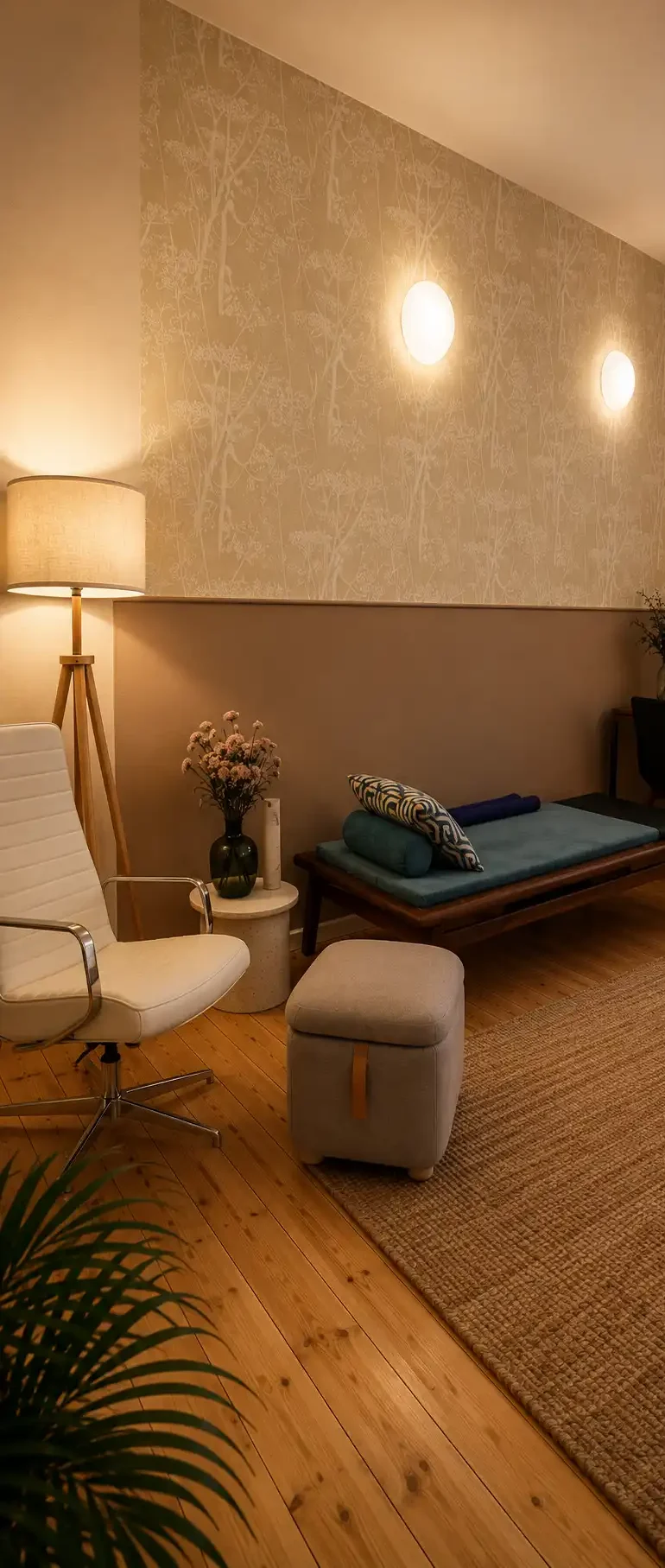
Behandlungsraum mit Praxisliege, Sessel, Stehlampe und Pflanze in warmem Licht

KNOWLEDGE & ORIENTATION

Understanding analysis

Psychoanalysis follows a clear therapeutic method. Some of its features, such as lying on the couch, working with dreams or free association, may seem unfamiliar at first. In fact, they serve an important therapeutic purpose. Here you can read about the thinking behind them and how they support the therapeutic process.

Psychoanalysis is about putting thoughts, feelings and inner reactions into words as freely as possible. Together we look at recurring relationship patterns and unconscious conflicts. The relationship with the therapist also plays an important role, as earlier experiences and expectations can show up here. The aim is to understand these patterns better and so open up new ways of experiencing and acting.

Lying on the couch is not a must but a therapeutic aid. Without direct eye contact, attention often turns more inward. Thoughts, memories and feelings can emerge more freely, without constantly orienting yourself to the other person’s reaction.
The couch thus supports a state of greater inner openness. Many people find that it makes it easier to access memories, fantasies and emotional connections. Whether lying down makes sense is, of course, decided together. At the beginning of treatment, sessions usually take place sitting up.

In psychoanalysis, dreams are seen as one possible way into the unconscious. They often contain themes, feelings or inner conflicts that are not immediately conscious in everyday life.
This is not about interpreting dreams according to fixed symbols. Their personal meaning matters far more. Together we explore which thoughts, memories or feelings are connected with a dream. This often reveals connections that can help to understand recurring relationship patterns or inner conflicts.
Not every dream has to be discussed, but when dreams come up, they can be a valuable part of the therapeutic process.

Regression describes a natural psychological state in which earlier feelings, memories or relational experiences can come alive again. In psychoanalysis, this is not seen as a step backwards but as an important opportunity to re-experience and understand unconscious experiences.
Within the safety of the therapeutic relationship, old emotional patterns can be recognised and worked through anew. This often leads to a deeper understanding of one’s own experience and the possibility of freeing oneself from painful repetitions in the long term.

Free association is one of the basic principles of psychoanalysis. It means saying as much as possible of whatever comes to mind, even if it seems unimportant, embarrassing, contradictory or unconnected.
It is precisely these spontaneous thoughts that often lead to unconscious connections which remain hidden in ordinary reflection. The therapist’s task is not to judge individual statements, but to understand the underlying patterns and meanings together.

Many psychological difficulties do not arise suddenly but develop over many years. They are often closely connected with early relational experiences and deeply rooted inner patterns.
Psychoanalysis takes time to understand these connections thoroughly and to change them in a lasting way. The aim is not only short-term relief, but a long-term change in how you experience things, in your relationships and in how you relate to yourself.
The length always depends on individual needs and is discussed together.

The relationship between patient and therapist is one of the most important factors in psychoanalysis. Experiences, feelings and expectations formed in other relationships can also show up within the therapeutic relationship.
These so-called transference processes are explored and understood together. This makes unconscious relationship patterns visible that often go unnoticed in everyday life, and opens up the possibility of new experiences and of changing entrenched patterns in the long term.

No. There is no expectation that you report something important or unusual in every session. Everyday thoughts, spontaneous ideas or seemingly minor observations are often especially revealing.
Psychoanalysis does not depend on dramatic events, but on paying close attention together to what emerges in the conversation. Pauses, uncertainty or the feeling of not knowing what to say can also be part of the process and offer important clues to inner connections.

Yes. Psychoanalysis can be emotionally challenging at times. When you engage closely with your own feelings, relational experiences and inner conflicts, painful memories or difficult emotions may come up.
That is exactly why this process takes place within a protected therapeutic setting. Painful experiences are not simply “relived” but understood and put into context together. The aim is not to intensify difficult feelings, but to work through them step by step and find new ways of dealing with them.
Many patients find that, although the work can feel demanding at times, in the long run it leads to greater inner freedom, stability and quality of life.

In German health insurance terms, psychoanalysis is called analytische Psychotherapie. In my private practice it can be reimbursed through private health insurance or Beihilfe , paid privately or, under certain conditions, funded by statutory health insurance through reimbursement (Kostenerstattung) . A session lasts 50 minutes; you will find how often we meet and in which setting in the comparison of methods. I describe how treatment begins under process.

Whether psychoanalysis or psychodynamic psychotherapy suits your situation depends, among other things, on whether a current, clearly defined conflict is in the foreground, or whether patterns are showing that have existed for a long time and affect several areas of life. You will find a detailed comparison of both methods here:

Which method suits you best can be assessed well after the first sessions.

GET IN TOUCH